
Table of Contents
Additions at a Glance
Three themes define the year: a new high-speed hard-milling concept, heat-resistant-alloy tooling that keeps its edge where heat destroys others, and a broad refresh of indexable bodies/inserts in both metric and inch. On top come grade updates that rebalance toughness vs. wear and new rake/chip-breaker packages that stabilize chips in stainless and Ti alloys.
Overview (from Catalog to Selection)
Category | New / Expanded Items | Coverage (Metric / Inch) | What It Solves | Where to Use First |
High-Speed Hard-Milling End Mills | Ultra-fine carbide sub-micron, variable pitch/helix, corner protection | Ø1–12 mm (metric), 1/16–1/2″ (inch) | Edge stability above 58–65 HRC, reduced micro-chatter | Mold finishing, die inserts, tool steels |
HRSA/Ti Solid End Mills | Sharp-yet-reinforced edges, coolant-through micro sizes | Ø2–20 mm; neck-relieved options | Heat control + notch wear resistance in Ni/Ti | Aerospace brackets, engines, medical Ti |
Solid Carbide Drills (Upgrade) | New split-point and margin design; Al/Ti/SS-specific coatings | Ø1–20 mm; selected inch sizes | Straighter holes, lower thrust, more holes per re-grind | General fab lines, powertrain, manifolds |
Indexable Face/Shoulder Mills | New cutter bodies + breakers for steel, SS, Al; M/I pitch matching | 40–160 mm, 1.5–6″ | Better chip evacuation at lighter DOC, fewer pulls | Mold base facing, structural plates |
Indexable End/Slot Mills | Small-diameter bodies, multi-corner inserts | Ø10–63 mm, 3/8–2.5″ | Cost-per-edge drop, flexible slotting | Automotive jigs, fixture slots |
Grooving/Threading (Indexable) | Profiled breakers for tubes/pipes; corrosion-friendly grades | Metric & inch | Burr control and stable pull-out on thin walls | Stainless tubing, hydraulic fittings |
Spotlight Series: What to Shortlist First
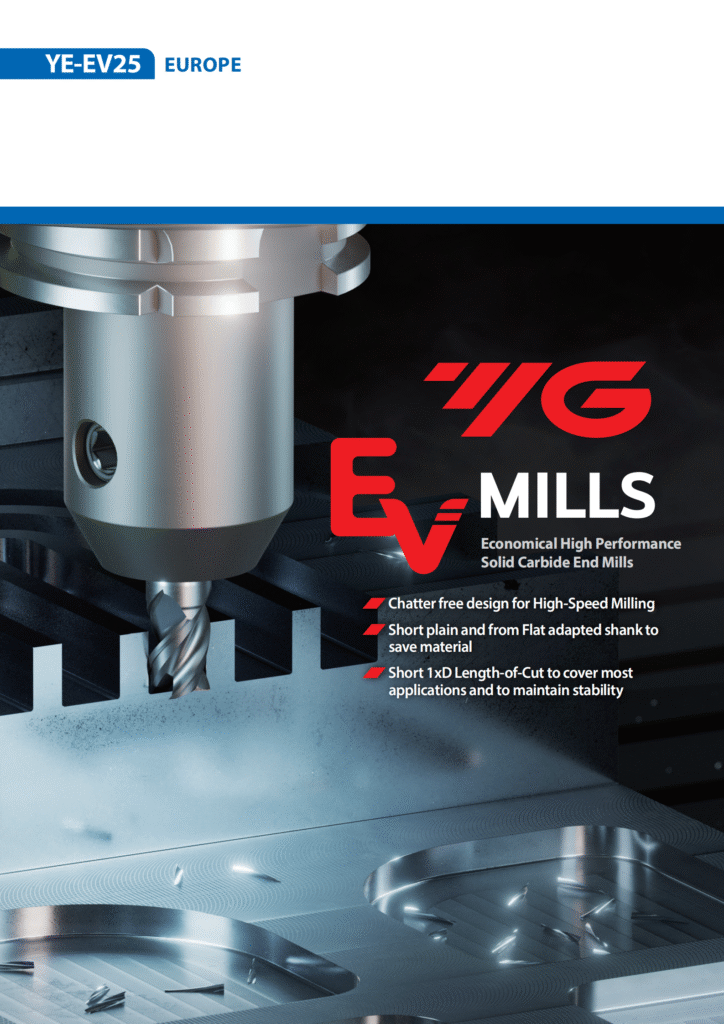
1) High-Speed Hard-Milling (HSM-H)
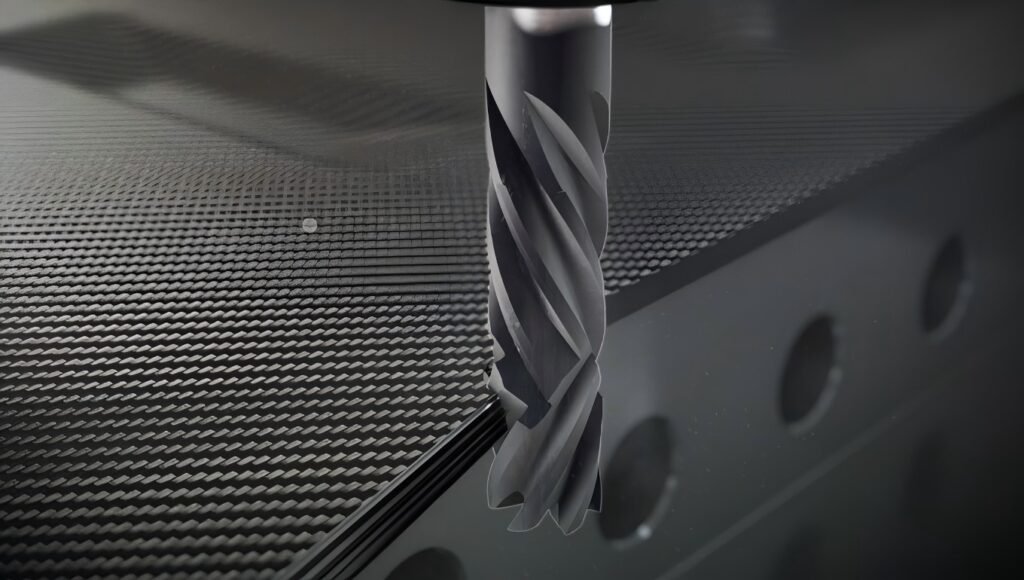
The new hard-milling concept pairs an ultra-fine-grain carbide with a variable pitch/helix and a reinforced corner. The idea is simple: keep chip thickness consistent at tiny radial engagements while preventing notch wear at the depth boundary. A low-friction AlTiN-type coating (hot-hard) completes the set.
Why pick it: Calmer spindle sound at 0.02–0.06 mm/tooth, fewer hairline cracks in 60+ HRC, longer predictable life in finishing.
Where it shines: Mold cavities, EDM skim-leave reduction, hardened tool steel ribs.
2) HRSA & Titanium Solid End Mills (AERO-X)
AERO-X brings a thin but tough edge with micro-hone options to tune entry behavior. Helix/rake combinations evacuate at low radial engagements, while the coating resists crater wear at high thermal loads. Necked-relief and reach SKUs cover deep pockets.
Why pick it: Fewer “singing” passes in Ti, smoother tool load in Inconel where chips stay stubbornly hot.
Where it shines: Aerospace brackets, Ti medical parts, engine hot-section details.
3) Solid Carbide Drills (DR-UP Series)
Split-point with controlled web thinning and optimized margin width brings lower thrust and straighter holes. Material-specific coatings (DLC-style for Al, TiAlN-style for steels, TiCN for SS) push more holes per edge.
Why pick it: Holes measure straighter without extra pecking; chip cylinders don’t weld in SS.
Where it shines: Multi-material job shops, automotive manifolds, mold base water lines.
4) Indexable Face/Shoulder Mills (IM-F/IM-S Families)
Bodies now mirror metric/inch pitches so plants can unify setups. New steel and stainless breakers prevent fugitive chips at light DOC—helpful where fixtures limit depth. Aluminum-specific geometries add mirror-like Ra.
Why pick it: Cost-per-edge transparency and flexible pitch options; bodies ready for high-pressure coolant.
Where it shines: Plate facing, shoulder prep, blended rough-to-semi in one holder.
New Grades & Geometries: Toughness vs. Wear, With Chip Control
YG-1’s 2024 grades target three stubborn problems: notch wear in hardened steels, thermal crater wear in HRSA/Ti, and built-up edge (BUE) in aluminum and austenitic stainless. Edge prep choices (micro-hone vs. razor), differential helix, and pressure-relief flute cores reduce the “singing” you hear at small radial step-overs.
Grade & Geometry Cheat Sheet
Family | Substrate / Grade | Coating | Edge Prep & Breaker | Behavior You’ll Notice |
HSM-H (Hard) | Ultra-fine carbide (sub-µ) | AlTiN-class (hot-hard) | Variable pitch/helix, reinforced corner | Lower boundary chipping; stable at 58–65 HRC with tiny ae |
AERO-X (HRSA/Ti) | Tough-lean carbide | Nano-TiAlN / AlTiN | Micro-hone 5–10 µm, high-evac flute | Less crater wear; calmer torque in Ti-6Al-4V |
DR-UP (Drills) | Fine carbide | DLC (Al), TiAlN (steel), TiCN (SS) | Split point, tuned margins | Lower thrust, cleaner exit in thin plates |
IM-F/IM-S (Indexable) | Cermet/Carbide grades | P/M/K-tuned CVD/PVD | Steel/SS/Al-specific breakers | Chips break predictably at light DOC; edges last longer |
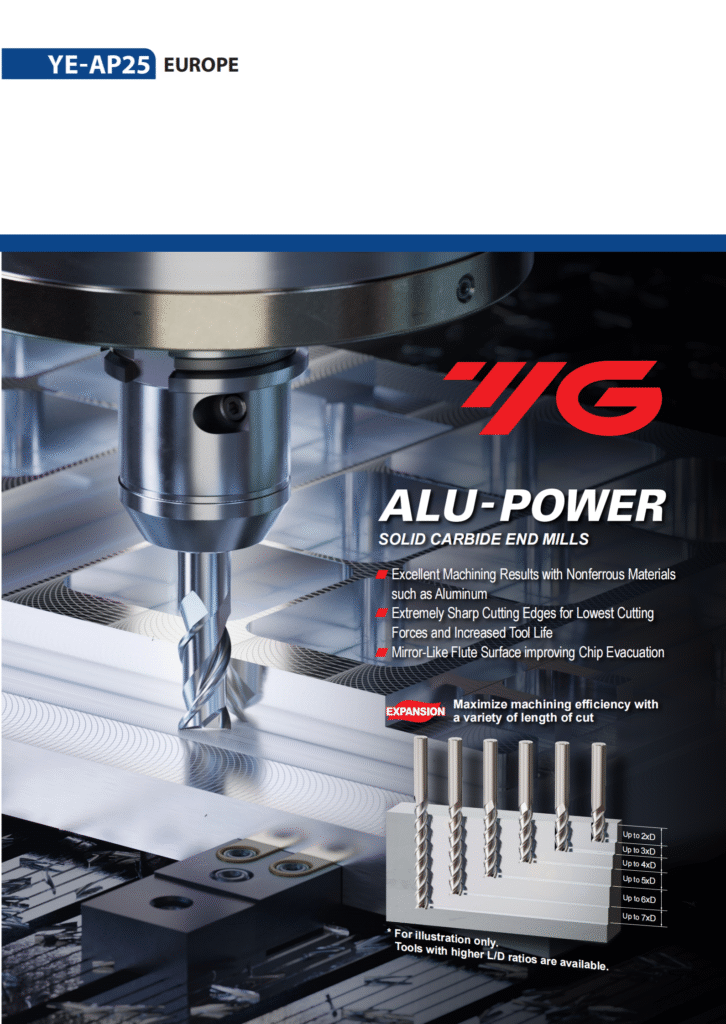
AL-Pro (Al Milling) | High-polish carbide | Uncoated/DLC | High-shear rake, mirror flutes | Zero BUE in 6xxx/7xxx; glassy finish at >20k rpm |
What You Gain vs. Your Old Set
If you’ve been living with 2020–2022 vintage tools, the delta is easy to feel and measure. Expect calmer cuts at lower radial engagement, better tool life in hard steel and HRSA, and more holes between re-grinds with the new drills. Unit cost per tool may be similar or slightly higher—but cost per finished feature trends down once you factor cycle time, tool life, and rework.
Upgrade ROI
Upgrade Path | Typical Tool Life Gain | Feed/Speed Uplift | Cost-Per-Edge | Practical Result |
General hard-milling EM → HSM-H | +25–60% | +10–20% fz at same ae | Similar | Fewer re-cuts to hit Ra; less edge chipping at depth boundary |
Legacy Ti/HRSA EM → AERO-X | +20–40% | +5–15% sfm (when coolant allows) | +5–10% | Smoother torque trace; less crater wear; fewer scrapped parts |
Std. SC drill → DR-UP | +30–80% holes | +10–20% vf (rigid) | Similar | Straighter holes; no peck in mild steels up to ~5×D |
Older indexable face mill → IM-F/IM-S | +15–35% edges | Same sfm, higher feed per tooth | Lower (more corners) | Light-DOC facing stabilizes; fewer chip nests in SS |
Selection: Make the Shortlist in 30 Seconds
Material & Hardness
≤45 HRC steels: General variable-pitch solid EM or IM-S steel breaker.
>55 HRC tool steels: HSM-H with corner protection.
Ti/HRSA: AERO-X with micro-hone; keep coolant-through if available.
Aluminum: AL-Pro (polished/DLC) or Al-breaker inserts.
Operation Strategy
Finishing hard steel at tiny ae: HSM-H, high rpm, small fz; verify balance.
Slotting steel at moderate DOC: IM-S steel breaker or tough solid EM.
Facing plates: IM-F body, pitch to match spindle power and chip load.
Drilling multi-material: DR-UP with coating by material family.
Machine & Coolant
High-speed spindles (>15k): Prefer balanced solids; keep bodies balanced too.
HP coolant (>30 bar): Use coolant-through drills/end mills in SS/HRSA.
Legacy/no HP coolant: Choose tougher edge preps; avoid overly sharp rakes in SS.
Lock the choice by gauge length and holder: keep reach as short as process allows; for high-speed Al use shrink or hydraulic holders; for heavy steel slotting use milling chucks or Weldon.
Industry Playbooks
Mold & Die (Hardened Tool Steels 58–65 HRC)
Core tools: HSM-H 2–4 flutes, corner-protected, long-neck variants for ribs.
Strategy: 0.5–8% radial, 0.02–0.06 mm/tooth, high rpm; step down with constant-engagement paths.
Indexable assist: IM-F for base facing; IM-S steel breaker for shoulders.
Why it works: Notch-resistant edge + variable pitch prevents boundary chipping, lowering rework.
Automotive (Steels, Ductile Iron, Al)
Core tools: IM-F for plate facing; DR-UP drills for manifold and cover holes; AL-Pro for 6xxx/7xxx Al.
Strategy: Keep chip load up; leverage multi-corner inserts for cost control; coolant-through drills to stop bird-nesting.
Why it works: Balanced cost per edge, predictable chips at light DOC, shorter hole cycles.
Aerospace (Ti/HRSA & Aluminum Structures)
Core tools: AERO-X for Ti and Inconel; AL-Pro for Al structural bays; neck-relieved solids for deep pockets.
Strategy: Small radial (5–15%), higher axial with stable holders; maximize coolant pressure in HRSA.
Why it works: Heat/torque stability prevents taper wear and chatter in thin walls.
Stainless Tube & Fittings (304/316, Duplex)
Core tools: Indexable grooving and profiling with stainless breakers; DR-UP TiCN drills.
Strategy: Control entry burr with split-point drills; use narrow-land breakers to cut pull-out risk; consider form tools for repeat grooves.
Why it works: Chips break before they wrap, surfaces de-burr faster, tapers size consistently.
Combo Selling: Ready-to-Order Kits
Bundle the tool + critical accessory to lock in the performance the catalog promises. The right holder, guide, or insert makes the difference between a spec and a result.
Kit A — Hard-Milling Finish Pack (Mold & Die)
Tool: HSM-H 2F/4F (choose Ø2–10 mm; neck-relieved options).
Holder: Hydraulic or shrink-fit (G2.5 @ operating rpm).
Extras: Corner-radius variants for edge protection; pull studs rated for high speed.
Why this bundle: Micro-TIR + damping keeps very small ae stable; radius tips survive step-downs.
Kit B — Titanium Pocketing Pack (Aerospace)
Tool: AERO-X 4–6F with micro-hone, neck relief on reach SKUs.
Holder: Milling chuck (grip) or hydraulic (finish); through-coolant if available.
Extras: High-pressure coolant lines, anti-pullout sleeve if using Weldon.
Why this bundle: Maintains torque stability in long-wall pockets; coolant prevents crater wear.
Kit C — Plate Facing & Shoulders (General Fab)
Tool: IM-F face mill body + steel/SS breakers (choose pitch for power).
Holder: Shell-mill arbor matched to body; torque-rated screws.
Extras: Spare insert seats and wipers; pre-set rings for fast swaps.
Why this bundle: The body + breaker + arbor match stops vibration at light DOC and speeds setup.
Kit D — One-Pass Holemaking (Multi-Material)
Tool: DR-UP solid carbide drill by material (DLC for Al, TiAlN for steel, TiCN for SS).
Guide: Proper pilot or bushing if fixture allows; peck only when needed.
Extras: Coolant-through if spindle supports; re-grind service pairing.
Why this bundle: Lower thrust and straighter holes cut cycle time across materials.
Parameter Direction (to Start Right)
Hard-milling (HSM-H): Start 180–260 m/min on 60–62 HRC with ae = 2–7% D, ap = 0.2–0.6 D; fz 0.02–0.06 mm. Reduce if wheels sing; increase if chips dust and edges stay cool.
Ti/HRSA (AERO-X): 30–60 m/min in Ti-6Al-4V, ae = 5–12% D, ap = 0.5–1.0 D; fz 0.03–0.09 mm; maximize coolant.
Al (AL-Pro): 300–800 m/min, fz 0.05–0.20 mm; use high-shear and polished flutes; balance holder.
Drilling (DR-UP): Steel 60–120 m/min, SS 20–45 m/min, Al 150–250 m/min; feed per rev ~0.02–0.24 mm depending on Ø; peck only beyond ~5×D (material-dependent).

Indexable Details That Matter
Pitch selection: Choose coarse pitch for low-power spindles or interrupted cuts; fine pitch for stable machines and higher feed per tooth at light DOC.
Breaker mapping: Steel breakers like deeper engagement to snap chips; stainless breakers carry and lift a thinner chip to avoid nesting; Al breakers are razor-sharp—reserve them for non-ferrous.
Corner strategy: Multi-corner inserts cut cost per edge but watch accuracy in finishing; keep a dedicated wiper insert for final Ra.
From Catalog Page to Cart: A Simple Flow
Pick the material / hardness and operation → shortlist the series above.
Choose the holder (shrink/hydraulic for speed and finish; milling chuck/Weldon for grip).
Lock geometry & grade (breaker for indexables; edge prep for solids).
Set initial parameters using the ranges here.
Order the bundle (tool + holder + inserts/consumables) so you’re not chasing stability later.
FAQ
Q: Are the new hard-milling tools just for finishing?
A: They’re optimized for tiny radial finishing and semi-finishing in hardened steels. For heavier axial steps or roughing, keep your dedicated roughers or indexable shoulders.
Q: Can I run the new Ti/HRSA end mills dry?
A: Not recommended. Use high-pressure, well-directed coolant. If heat isn’t managed, crater wear will dominate.
Q: Do I really need a hydraulic or shrink holder?
A: Above ~12–15k rpm or when ae is tiny, yes—runout and balance determine surface and edge life. For heavy slotting, a milling chuck or Weldon is still king.
Q: How do I choose indexable pitch?
A: Start with the body the spindle can pull comfortably at your DOC. If torque spikes or the sound is rough, drop to a coarser pitch or reduce teeth in cut.
Q: What about re-grinds on the new drills?
A: The DR-UP margins and split point are designed to re-grind well. Track hole counts; many shops see cost-per-hole fall further after first re-grind.