
Table of Contents
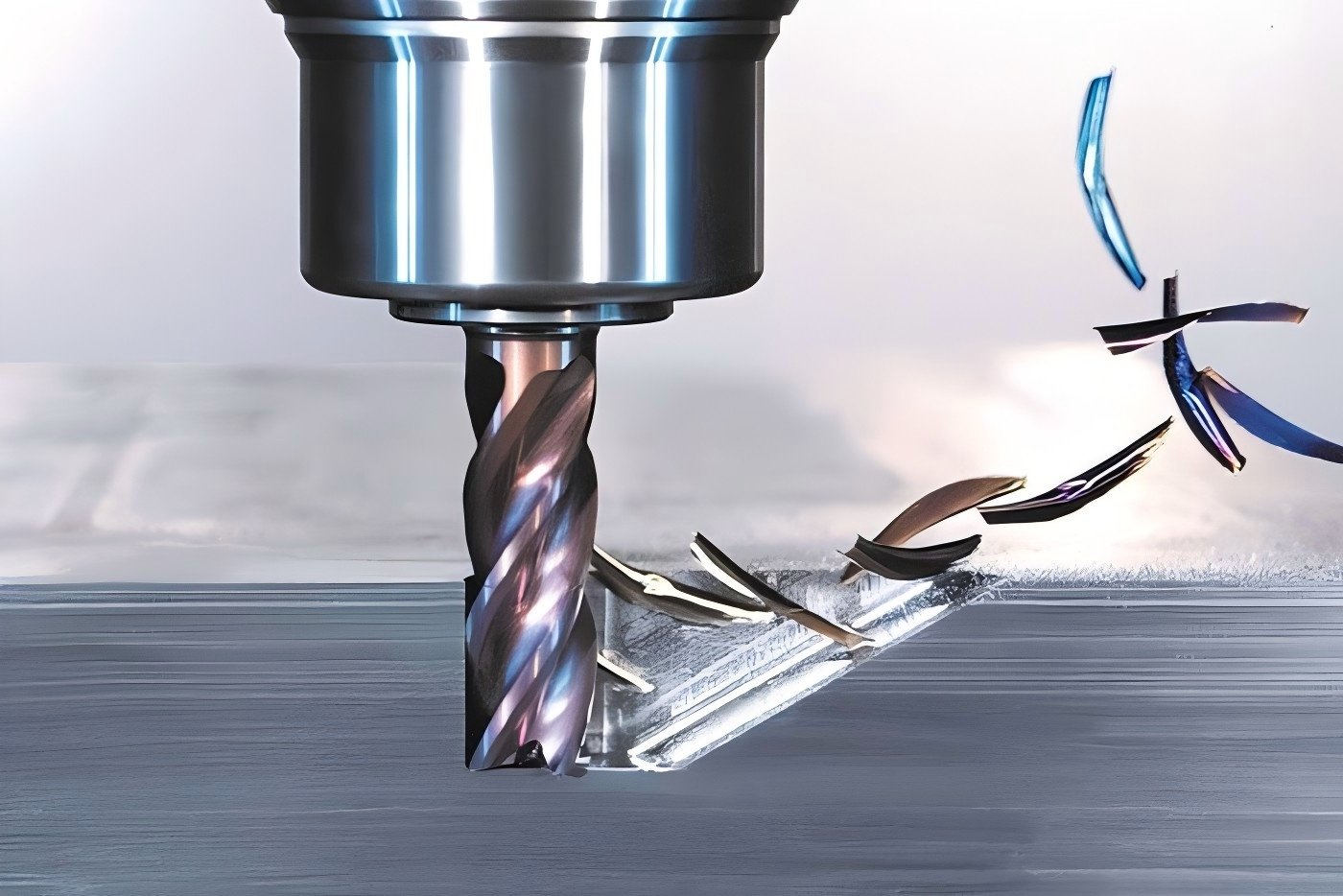
For machine shops that live and die by spindle uptime, GUHRING has become a go-to precisely because their best tools aren’t “general purpose”—they’re purpose-built for real bottlenecks: chatter in stainless, weak chip control in HRSA, countersink tear-out in hand-held operations, and cycle time bloat from too many tool changes. In this guide, we walk through GUHRING products that are seeing strong pull-through right now—plus what’s new in their lineup—and match each to the problems you’re likely solving on your floor.
We concentrate on three families:
1) RF100 end mills—including RF100 Diver, RF100 Sharp, and the updated 5-Speed / 7-Speed portfolio.
2) PIONEX forming and cut taps—re-engineered to reduce torque and extend life.
3) RT100 drills—notably RT100 FB flat-bottom and RT100 XF deep-reach options.
Why these lines are winning right now
Across metal-cutting, two macro trends keep showing up in shop audits:
– Fewer setups, more tool flexibility. A mill that ramps, plunges, slots, and finishes in one stick means fewer tool changes and fewer broke-off pilots.
– Lower cutting forces in tough materials. If you can reduce torque/axial load at the tool, you reduce heat, preserve tolerances, and protect smaller spindles.
– Reliable “first-try” finishes. Edge profiles and chip evacuation that save a second op (or a hand-finish) add up fast.
RF100 End Mills: fewer tools, more ops
RF100 Diver: one tool for five ops
The RF100 Diver remains a bestseller because it performs five operations with one tool—drilling, ramping, slotting, roughing, and finishing—across steels, stainless, cast irons, non-ferrous, superalloys, and hardened steels (P/M/K/N/S/H groups). That flexibility is why shops adopt it to reduce pocket-mill + slot-mill + drill stick counts.
Two recent availability notes matter in day-to-day quoting:
• The Diver family now includes coolant-fed and 3-flute variants (useful in gummy aluminums and toolpath strategies that favor higher chip loads).
• Full inch and metric series are stocked in popular diameters; check Series 6736 (metric) and Series 6757 (inch) when you need quick replacements.
RF100 Sharp: finishing surfaces without babying the feed
RF100 Sharp is positioned as a high-performance finisher with edge prep and flute geometry that support clean walls at aggressive feeds—useful when you’re chasing surface spec without adding a spring pass. It’s often paired with the Diver in shops that split rough/finish for life reasons.
RF100 5-Speed and new 7-Speed: milling by material “gears”
In March 2024, GUHRING updated its RF100 5-Speed catalog and added new 7-Speed end mills—organizing geometry and coating options into material-centric gears. This simplifies training and quoting by letting programmers pick the right cutter per ISO material group.
When to choose each RF100 option
Scenario on the floor | Recommended RF100 line | Why it wins | Notes |
Mixed ops inside a pocket, minimal tool changes | RF100 Diver | Ramps, plunges, slots, roughs, finishes with one tool | Metric Series 6736 / Inch Series 6757 |
Finish-critical walls, fewer spring passes | RF100 Sharp | Edge geometry supports higher feed finishing | Good companion to Diver |
Material-specific optimization (steel, stainless, etc.) | RF100 5-Speed / 7-Speed | Material-centric catalog logic | 7-Speed is the latest expansion (03/08/24) |
Aluminum slotting with chip-evac demands | RF100 Diver 3-flute | Higher chip-load capability; coolant-fed options | Best on gummy aluminums |
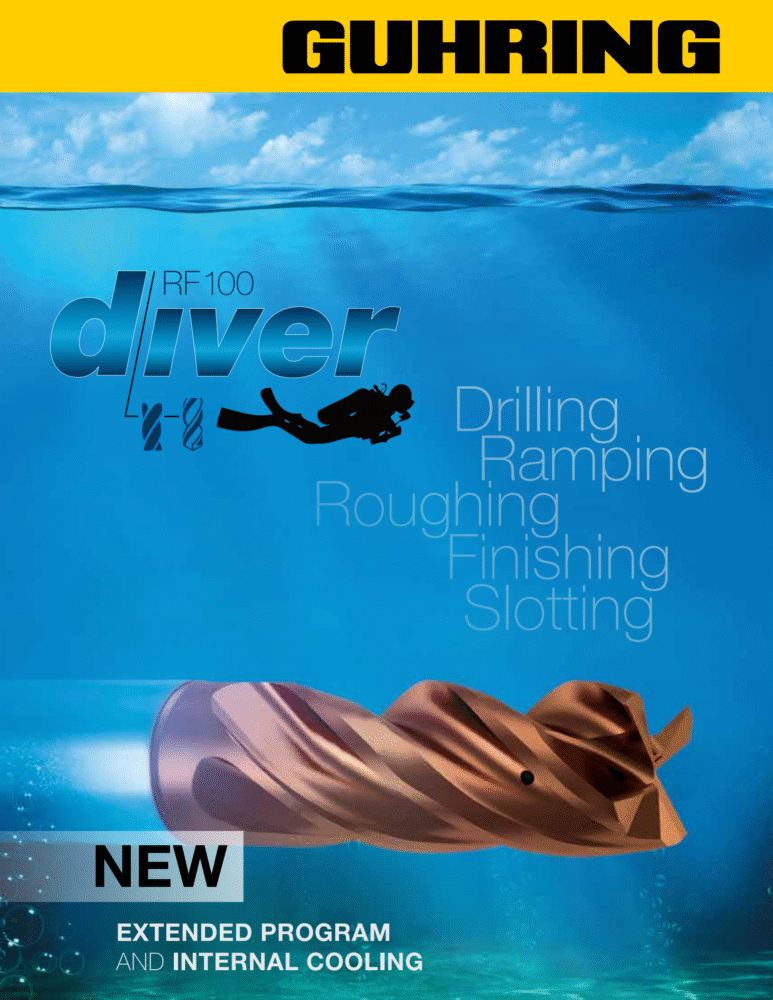
GUHRING RF 100 Diver End Mills
PIONEX: taps that cut torque (and heat) by design
Thread quality is only half the battle; tap torque and axial force are the silent killers of tool life and tolerance stability in stainless and sticky aluminums. GUHRING’s PIONEX generation of fluteless/form taps addresses this with a new polygon lobe geometry and surface optimization that reduces torque and axial force by up to ~30%. PIONEX also spans cut taps in the same ecosystem—so if your application prefers a chip-forming approach, you can stay within a single family for programming simplicity.
PIONEX vs conventional taps—what changes on the machine
Criterion | Conventional fluteless/cut tap | PIONEX (form & cut series) | What it means in production |
Tap torque & axial force | Baseline for geometry | Up to ~30% lower via polygon lobes & surface finish | Lower heat, easier on spindles, extended life |
Thread quality in difficult alloys | Sensitive to lube & chip packing | More stable due to optimized contact area | Fewer pulled threads in 300-series stainless |
Coating & material coverage | Mixed; series-by-series | Coatings matched by series (e.g., Slidur on cut taps) | Easier sku-level matching during quoting |
Ecosystem consistency | Often fragmented | Unified family across form and cut | Simplifies programmer defaults and crib |
RT100 Drills: flat bottoms and deep reach, without drama
Two RT100 standouts show up repeatedly in purchase histories:
• RT100 FB (Flat-Bottom): A coolant-fed solid-carbide drill that produces true flat-bottom holes, even on oblique/curved surfaces—often eliminating a spot + mill pass.
• RT100 XF: High-performance drills including 3×D and 12×D options, allowing you to standardize feeds/speeds and stretch reach without switching families.
Countersinking that behaves like finishing: SpyroTec®
Countersinking is often where cycle time gets soft—hand-helds vibrate, and even on a VMC you can fight chatter rings. SpyroTec countersinks use helical cutting edges with a convex form and variable pitch to stabilize the cut and limit vibration—even on a hand drill. In practice, that translates to rounder, cleaner seats and fewer touch-up spins.
Material/application map
Material/application | First choice | Alternate / notes |
General steels (ISO P), pocketing with minimal tool changes | RF100 Diver | Use Diver 3-flute/coolant-fed for slotting in gummy grades |
Stainless (ISO M), finish-critical | RF100 Sharp for finishing passes | Pair with Diver for roughing; consider RF100 5-/7-Speed tuned to M materials |
Mixed materials across pallets (job shop) | RF100 5-Speed/7-Speed | Cataloged by strategy/material—speeds up selection |
Threads in stainless/aluminum, torque-sensitive | PIONEX form taps | Up to ~30% torque/axial-force reduction keeps heat down |
BSPP/UNF cut-thread work | PIONEX cut taps | HSS-E, coated options for broad steel/stainless coverage |
True flat-bottom holes, inclined/curved surfaces | RT100 FB | Eliminates mill flattening step in many cases |
Deep-reach drilling with one family | RT100 XF (3×D, 12×D) | Standardize feeds/speeds across lengths |
Clean, chatter-free countersinking (even hand-held) | SpyroTec countersinks | Helical/variable-pitch/convex edges for stability |
Programming notes & shop-floor tips
- Toolpath strategy with RF100 Diver: Set CAM templates to ramp entries (10–20° micro-ramp where allowed) and keep a conservative first pass when transitioning from ramp to slot to avoid transient load spikes.
- When to choose 3-flute in aluminum: Newer 3-flute options (plus coolant-through) allow higher chip loads with adequate evacuation—helpful on 6xxx/7xxx alloys.
- Tapping torque matters more than you think: High torque inflates temperature, which grows holes and makes pitch control sloppy—especially in thin walls. PIONEX’s polygon lobes reduce contact area and axial forces.
- Countersink seats without rework: If assemblers flag burred or lobed seats, try SpyroTec before adding a deburr op; its variable pitch suppresses chatter.
What’s “new” vs. what’s simply “better” stocked
- New/expanded: The RF100 7-Speed expansion (with the 5-Speed catalog refreshed March 8, 2024) expands SKUs while simplifying selection logic.
- Newish but impactful: The RT100 FB flat-bottom drill and RT100 XF range extensions were updated in late 2023—still new to many shops and extremely useful in 2024–2025 quoting.
- Perennial hot-seller: RF100 Diver keeps selling because reducing tool count is evergreen; the catalog now highlights coolant-fed and 3-flute variants.
- Process-fixer: PIONEX earns its place because torque/force reduction is measurable—especially with smaller spindles or materials that like to gall.
SKU examples that quote fast
- RF100 Diver (metric) – Series 6736 and (inch) – Series 6757 pages show widely used diameters and clearly indicate coating options.
- PIONEX cut taps (e.g., Series 4659) show thread class, coating, and material application icons—handy for quote footnotes.
Suggested product copy blocks
RF100 Diver – “Five-ops flexibility”
Consolidate drilling, ramping, slotting, roughing, and finishing into one program. RF100 Diver’s geometry and coatings deliver stable ramp entries and strong wall finishes across steels, stainless, cast irons, aluminum, superalloys, and hardened steels. Now available in coolant-fed and 3-flute variants for higher chip loads in non-ferrous.
RF100 Sharp – “Finish at feed”
RF100 Sharp is tuned for finish-critical walls. Expect fewer spring passes and consistent surface specs at productive feed rates.
PIONEX Taps – “Lower torque, longer life”
PIONEX’s polygon lobe geometry and specialized surface reduce tap torque and axial load by up to ~30%. The result: cooler cuts, cleaner threads, and predictable life in stainless and sticky aluminums. Available in form and cut variants under one family.
RT100 FB – “True flat bottoms, fewer ops”
Coolant-fed solid-carbide drill engineered for true flat-bottom holes—even on oblique/curved surfaces—eliminating a flattening mill in many cases.

Implementation checklist for your shop
- Standardize on Diver + Sharp for general pocketing: Diver for entry/rough/slot, Sharp for finish.
- Add PIONEX to all stainless/thread-critical routings; monitor spindle load or current during validation—you should see a measurable drop.
- Swap spot+mill for RT100 FB where seats demand flatness; check stackups that currently require a secondary counterbore.
- Use the 5-/7-Speed catalogs to build a “material first, then geometry” chooser in your CAM templates; this cuts mis-picks by new programmers.
Sources & further reading
- GUHRING RF100 Diver, RF100 Sharp, RF100 5-/7-Speed catalogs and product pages.
- GUHRING PIONEX fluteless (form) and cut taps technical notes.
- GUHRING RT100 FB and RT100 XF drill family updates (2023).
- GUHRING SpyroTec countersink product guides.