
Table of Contents
If your customers are pushing toward unmanned shifts, higher metal removal rates, and fewer tool changes, MAPAL’s 2024–2025 releases are purpose-built for that reality. The third-generation OptiMill-Uni-HPC family targets automated reliability at aggressive parameters; OptiMill-Uni-HPC-Pocket collapses “spot → ramp → rough” into fewer tools; and NeoMill indexable platforms bring cost-effective roughing to cast iron, steel, and stainless. For aluminum—especially aerospace—MAPAL now publishes removal-rate claims that belong on any ROI slide.
What’s new—and why shops care
Three market pressures are converging on most modern shops:
1) Automated reliability. If a program must run overnight, tools need predictable chip formation and stable forces.
2) Fewer tools per feature. Every additional stick is another risk and another manual touch.
3) Documented removal rates. Buyers want evidence that a tool saves time (and spindle wear) in real materials.
MAPAL’s recent launches and updates address those points:
• OptiMill-Uni-HPC (Gen 3): new cutting material, configurable edge prep, integrated chip breaker for short, controllable chips—explicitly pitched for automated manufacturing in steel, stainless, and cast iron.
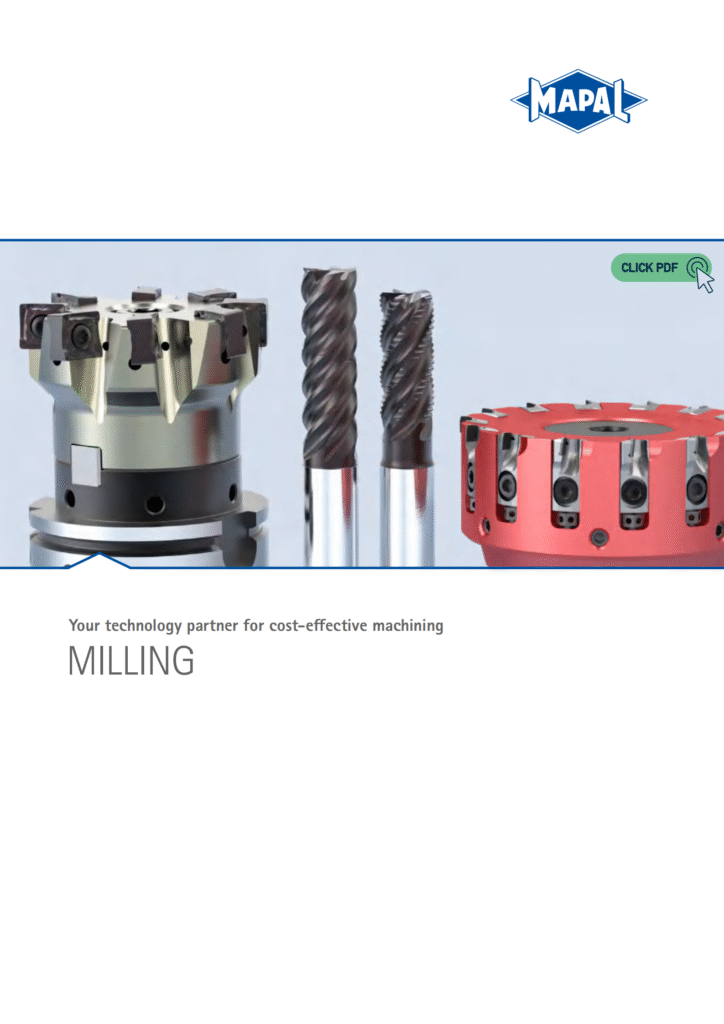
• OptiMill-Uni-HPC-Pocket: three-edged, solid-carbide pocketing cutter with integrated drill point, 3×D cutting length, and three chip breakers per edge.
• High-volume aluminum solutions: aluminum roughing options demonstrate up to ~21 L/min material removal on top-tier machines.
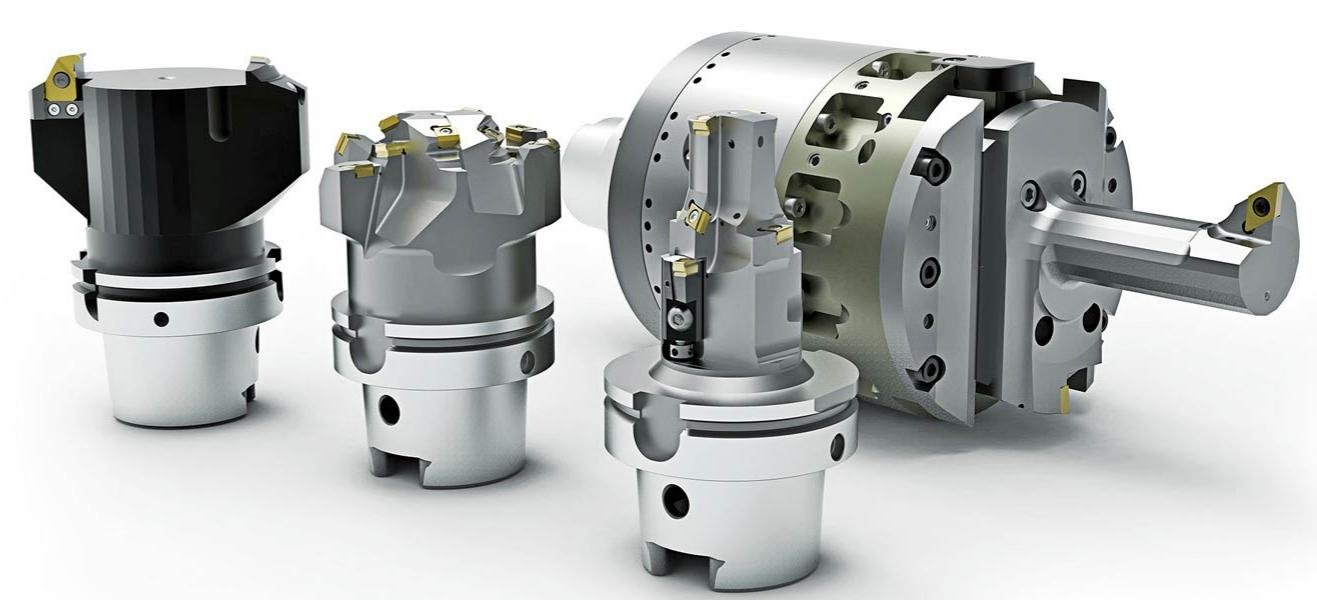
• NeoMill indexable platforms: positive/negative inserts (including 16-edge faces for cast irons/HRCS) for cost-effective roughing and good surfaces via wipers.
• UNIQ workholding updates: broader interfaces like BT40 and previews of DirectCool cooling in UNIQ hydraulic chucks.
Spotlight: OptiMill-Uni-HPC (Gen 3) — built for lights-out reliability
The third-generation OptiMill-Uni-HPC sits at the center of MAPAL’s “automated manufacturing” message. Key elements:
• Configurable cutting-edge design and optimized micro-geometry for high feed across steels (P), stainless (M), and cast irons (K).
• New cutting material for longer life under elevated heat and load.
• Integrated chip breaker that shortens chips at high infeed—critical when running dry or with air blast.
Where it fits in your catalog:
• Primary use: adaptive/constant-engagement roughing and high-feed milling in P/M/K groups; pair with a finisher when surface spec matters.
• Value message: “Designed to run long and run alone”—reduced monitoring, stable loads, fewer chip-jam stops.
Pocketing with fewer tools: OptiMill-Uni-HPC-Pocket
The HPC-Pocket variant is especially reseller-friendly because it collapses operations. Literature highlights: integrated drill point, inclined plunging up to 45°, full helix milling, grooving, high MRR up to 2×D, and short-chip geometry for process reliability.
Technical notes to quote:
• Three chip breakers per cutting edge (3×D) to keep chips short and avoid re-cut.
• Grooving (drilling) & ramping with very high feed rates.
• Long tool life and maximum process safety.
MAPAL-Milling
Finishing at speed: OptiMill-Uni-HPC-Finish
Where walls and floors must meet surface spec quickly, MAPAL offers a seven-flute finisher in the Uni-HPC ecosystem. Expect very high surface finishes in short cycle times thanks to a stable core diameter that resists deflection—even at infeeds up to 5×D.
Aluminum removal rates that justify the switch
For aerospace and general-aluminum customers, MAPAL cites its Opti-Mill-Alu-Wave rougher with material removal up to ~21 L/min on the fastest machines. Use this benchmark carefully—it presumes capable machine dynamics and excellent chip evacuation—but it’s a credible reference for ROI discussions.
Indexable economics: NeoMill for cast iron, steel, stainless
The NeoMill family provides broad face/shoulder/slot/shell options with positive or negative inserts and wiper edges for solid surfaces without fussy adjustment. Notably, the NeoMill-16-Face cutter offers 16 cutting edges per insert for cast iron and heat-resistant cast steel—an easy cost-per-edge win.
Workholding that keeps up: UNIQ MillChuck & DirectCool
Selling high-feed milling without stable toolholding is a false economy. MAPAL’s UNIQ MillChuck is positioned for high-dynamic milling; recent announcements extend interfaces (e.g., BT40) and clamping diameters. UNIQ DirectCool adds targeted cooling in hydraulic chucks to push reliability and life further.
Quick selector: by material & operation
Material / Scenario | First Choice | Why it wins | Notes |
General steels (ISO P) high-feed roughing | OptiMill-Uni-HPC (Gen 3) | New geometry/carbide + chip-breaker for short chips in automated runs | Pitch as “lights-out ready.” |
Stainless steels (ISO M) adaptive roughing | OptiMill-Uni-HPC (Gen 3) | Stable load, reliable evacuation under air or MQL | Use finisher for final walls. |
Cast iron high-MRR facing | NeoMill-16-Face | 16 edges per insert; good surfaces via wiper | Easy cost-per-edge story. |
Pocketing with fewer tools (steel/cast iron) | OptiMill-Uni-HPC-Pocket | Integrated drill point, ramp to 45°, short chips | Collapses spot/ramp/rough. |
Aluminum hog-out (aerospace) | Opti-Mill-Alu-Wave or NeoMill-Alu-QBig | Documented high MRR on fast machines | Confirm machine power/chip evac. |
Finish-critical walls/floors | OptiMill-Uni-HPC-Finish | 7-flute finisher, up to 5×D infeed, stability vs deflection | Cuts spring passes. |
“One-stick” pocketing vs traditional stack
Method | Tools Typically Needed | Cycle-time Risk | Scrap/Intervention Risk | Recommended MAPAL Alternative |
Traditional: spot → ramp → rough | Center drill + end mill(s) | Toolchange overhead; transient load spikes at entry | Long chips, chip jam; human “rescues” | OptiMill-Uni-HPC-Pocket: integrated drill point; 3 chip breakers per edge; helix + slot in one tool |
One-stick pocketing | Single multi-mode cutter | Reduced; fewer entries and tool changes | Lower—short chips, predictable evacuation | Pitch as “fewer sticks, fewer stops.” |
Removal-rate & edge-economics snapshot
Use Case | Platform | Removal/Edge Notes | What to emphasize in quotes |
High-volume Al roughing | Opti-Mill-Alu-Wave | Up to ~21 L/min MRR on fastest machines | Machine dynamics and coolant/chip evac readiness |
Cost-per-edge in cast irons | NeoMill-16-Face | 16 edges per insert + wiper surfaces | Cost-per-part + reduced finishing passes |
Lights-out steel roughing | OptiMill-Uni-HPC (Gen 3) | Chip-breaker for short chips at high infeed | Lower monitoring labor; fewer unplanned stops |
Programming & process tips
- Engage the chip-breaker: test slightly higher radial engagement (ae) and infeed than old recipes—within MAPAL’s guidance—to force short chips, especially when running dry/air.
- Pocketing templates: incline up to 45°, then full-helix grooving with Uni-HPC-Pocket; validate 3×D cutting length in deepest features.
- Finisher vs spring pass: switch to Uni-HPC-Finish where walls must hit spec quickly; the stiff core and seven flutes often eliminate the skim pass.
- Aluminum MRR trials: run controlled trials and report MRR (cm³/min or L/min) to set expectations vs the ~21 L/min ceiling on top-tier machines.
- Sell the stack: bundle UNIQ MillChuck (BT40/HSK) with high-feed solids; DirectCool is a premium upgrade path for long roughing cycles.
Positioning guide
OptiMill-Uni-HPC (Gen 3) — “Built to run alone.”
Third-generation geometry, new cutting material, and an integrated chip breaker keep chips short and predictable at high infeed. Optimized for automated roughing in steels, stainless, and cast irons.
OptiMill-Uni-HPC-Pocket — “Open pockets fast, with one tool.”
Three-edged solid-carbide cutter with integrated drill point for spot, ramp, helix, and groove in one program. Three chip breakers per edge and 3×D cutting length deliver short chips and high process safety.
OptiMill-Uni-HPC-Finish — “Finish at feed—skip the spring pass.”
Seven-flute finisher with a stiff core to hit surface spec quickly, even at infeeds up to 5×D.
Opti-Mill-Alu-Wave / NeoMill-Alu-QBig — “Aerospace-grade removal.”
For hog-outs in aluminum, MAPAL publishes ~21 L/min removal on top-tier machines. Pair with robust evacuation for repeatable gains.
NeoMill family — “Indexable economics without ugly surfaces.”
Positive/negative inserts, wiper edges, and 16-edge face options put cost-per-edge and surface quality in the same sentence—especially in cast irons and HRCS.
UNIQ MillChuck / DirectCool — “Hold like you mean it.”
High-dynamic hydraulic chucks now cover more interfaces and diameters; DirectCool adds targeted cooling for life and reliability—ideal for long roughing cycles.
What to stock (and feature) on a reseller site
- Core solids: OptiMill-Uni-HPC (Gen 3) in popular diameters for P/M/K, plus Uni-HPC-Pocket and Uni-HPC-Finish to complete the rough-to-finish story.
- Aluminum volume: Opti-Mill-Alu-Wave or NeoMill-Alu-QBig SKUs for aerospace and general aluminum hog-outs.
- Indexables: NeoMill face and shoulder cutters with the most-requested positive/negative inserts for cast iron and steel roughing.
- Workholding: UNIQ MillChuck in BT40/HSK-A63 for high-feed bundles; mention DirectCool as a premium upgrade path.
Final take: sell reliability and removal, not just SKUs
MAPAL’s 2024–2025 emphasis is clear: reliability for automation and documented removal rates. Lead with OptiMill-Uni-HPC (Gen 3) where lights-out is the goal; use Uni-HPC-Pocket to consolidate pocketing ops; and plug NeoMill when cost-per-edge and roughing efficiency dominate the discussion. For aluminum, quote the ~21 L/min benchmark as a potential—then help the buyer achieve it with the right evacuation and toolholding. Fewer stops, more stock out.